Best Running Treadmill for Home (2026): Belt, Motor and Speed Specs That Actually Matter
Last updated November 2026
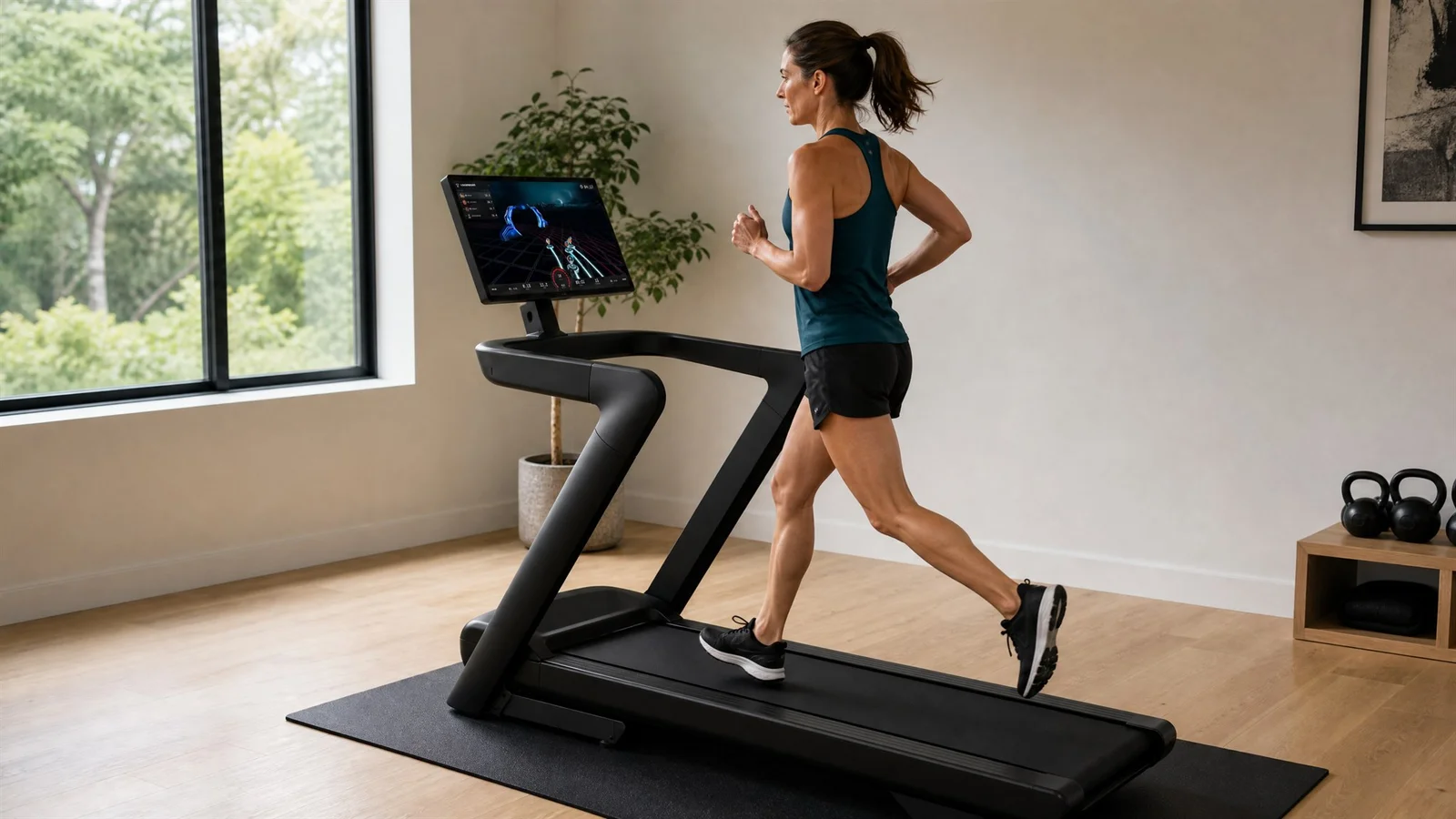
Short answer: The best running treadmill for home has a belt at least 60 inches long and 20 to 22 inches wide, a motor rated at 3.0 continuous horsepower (CHP) or more, a top speed of at least 12 mph, a properly cushioned deck and power incline. If you run long, run often or weigh over 200 pounds, aim for 3.5 to 4.0 CHP or higher. For most runners, our pick is the Aviron Podium: a 22" x 60" deck, a 4.5 CHP brushless motor, 14 mph, 18% incline, and it still folds.
Every treadmill says it's built for runners. Read the spec sheet closely, some list peak horsepower instead of continuous horsepower, and some decks are a few inches short of a running stride.
Five specs separate a running treadmill from a walking one, and a sixth decides whether you'll still be using it. (Full disclosure: Aviron makes the Justice, Podium and Summit, the three treadmills compared here. Other brands appear only as spec benchmarks.)
In this article
- 1. How long should a running treadmill belt be?
- 2. How much motor does a running treadmill need?
- 3. What top speed do runners actually need?
- 4. Does treadmill cushioning matter for runners?
- 5. Do runners need incline and decline?
- 6. What keeps runners on the treadmill past month two?
- Which Aviron treadmill is best for running?
- Which running treadmill should you choose?
- FAQ
1. How Long Should a Running Treadmill Belt Be?
Your stride gets longer as you speed up, so runners need more belt than walkers. TreadmillReviews.net puts the minimum for running at 20 inches wide by 60 inches long and calls 22" x 60" ideal. Walkers can get away with 50 to 55 inches.
On a short belt you end up shortening your stride without noticing. On a narrow one, every drift toward the side rail becomes a near miss.
Aviron sets its height limits by deck length, since taller runners take longer strides. The Podium's 22" x 60" deck is rated for users up to 6'7", the Summit's 22" x 61" deck (Aviron's largest) for users up to 6'8", and the Justice's 20" x 59" deck for users up to 6'6".
That leaves the Justice an inch under the 60-inch benchmark. Garage Gym Reviews' tester said its deck was "long enough that I never felt like I was going to fall off or had to shorten my strides," though GGR's review also notes that taller runners with long strides may want more room. If you're tall and run fast, go with the Podium or Summit.
2. How Much Motor Does a Running Treadmill Need?
Look for continuous horsepower (CHP), the power a motor can hold for a whole session, rather than the peak number on the box. TreadmillReviews.net recommends at least 3.0 CHP for regular running, and 3.5 to 4.0 CHP if you run long distances, train for marathons, weigh over 200 pounds or share the treadmill with family. As a benchmark, the top overall pick in Garage Gym Reviews' running roundup, the NordicTrack Commercial 1750, has a 4.25 CHP motor.
Speed and incline work a motor much harder than walking does, and an underpowered one runs hot and wears out sooner. The Podium and Summit use 4.5 CHP brushless motors that stay cool through long or hard sessions. The Justice's 3.5 CHP motor handles regular runs and sprint intervals, and GGR's tester found the Justice "well-built and sturdy, even when sprinting."
Weight capacity is a good clue to frame strength: 350 pounds on the Podium and Summit, 300 on the Justice.

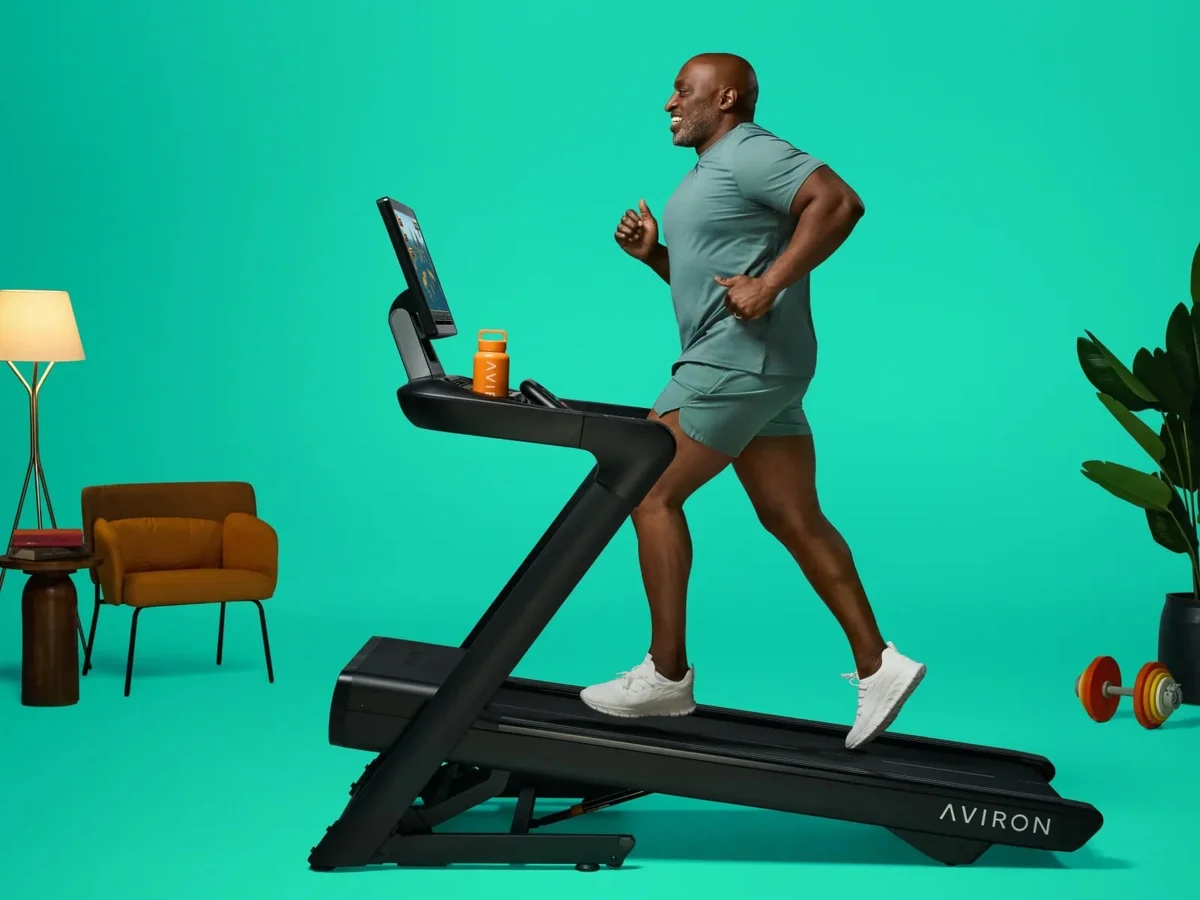
A 4.5 CHP brushless motor, 14 mph, 18% incline and a 22" x 60" deck for users up to 6'7". It still folds.
3. What Top Speed Do Runners Actually Need?
Many home treadmills top out at 12 mph, a 5:00 mile, which covers most runners' training and race paces. Top speed matters more if you sprint, since intervals near your max eat into that headroom. In running terms, the console numbers work out like this:
| Treadmill speed | Pace per mile | 5K at that pace |
|---|---|---|
| 6 mph | 10:00 | 31:04 |
| 7 mph | 8:34 | 26:38 |
| 8 mph | 7:30 | 23:18 |
| 10 mph | 6:00 | 18:38 |
| 12 mph | 5:00 | 15:32 |
| 14 mph | 4:17 | 13:19 |
Pace math, rounded to the nearest second.
The Justice tops out at 12.5 mph (a 4:48 mile). The Podium and Summit reach 14 mph (4:17). On the Summit, top speed adjusts with the grade for safety: 12 mph on a decline, 14 mph up to 15% incline, 8 mph above 15% and 6 mph above 25%.
For intervals, how quickly the belt gets up to speed matters too. All three Aviron treadmills let you adjust belt acceleration. On the Podium you choose 0.5 mph per second (the default) or 0.75 mph per second, so going from a 5 mph recovery to a 10 mph sprint takes 10 seconds, or under 7. The Justice and Podium also have one-touch speed keys you can reset to your own paces, and the Summit puts speed and incline keys on its handles.
4. Does Treadmill Cushioning Matter for Runners?
Yes. A run is thousands of landings, and a cushioned deck softens every one. GGR gives its top comfort scores to treadmills with larger decks and above-average cushioning.
Running on that softer surface still trains the same movement. A 2020 review of 33 studies found treadmill and overground running biomechanics "largely comparable," so the fitness you build indoors carries over to the road.
The Justice and Podium run on a CloudStride deck with 8 shock absorbers. The Summit's Max CloudStride uses 8 extra-large ones and is the most cushioned deck Aviron makes. As for stability, GGR's Podium tester reported, "I didn't notice any wobbling or shaking at any point," and that included "running at my top speed."
5. Do Runners Need Incline and Decline?
You'll want incline for two reasons. First, outdoors you push through air and on a treadmill you don't. A 1996 study by Jones and Doust found that a 1% grade best matched the energy cost of running outside at speeds of roughly 6.5 to 11 mph. Set the deck to 1% for any run you want to feel like the road.
Second, hills. Incline work builds your glutes, hamstrings and calves, and it lets you train for a hilly course without leaving the house. The Justice climbs to 15% and the Podium to 18%.
Decline is rarer, and it's what you need to rehearse the downhill stretches of a race. GGR describes the NordicTrack Commercial 1750, at -3%, as "one of the few treadmills that has decline training capabilities." The Aviron Summit runs from a -6% decline to a 42% incline, one of the steepest ranges on any home treadmill, and TreadmillReviews.net named it the "Best Treadmill for Gaming While Running" in its 2026 runners roundup. Our incline treadmill guide covers how much grade you actually need.
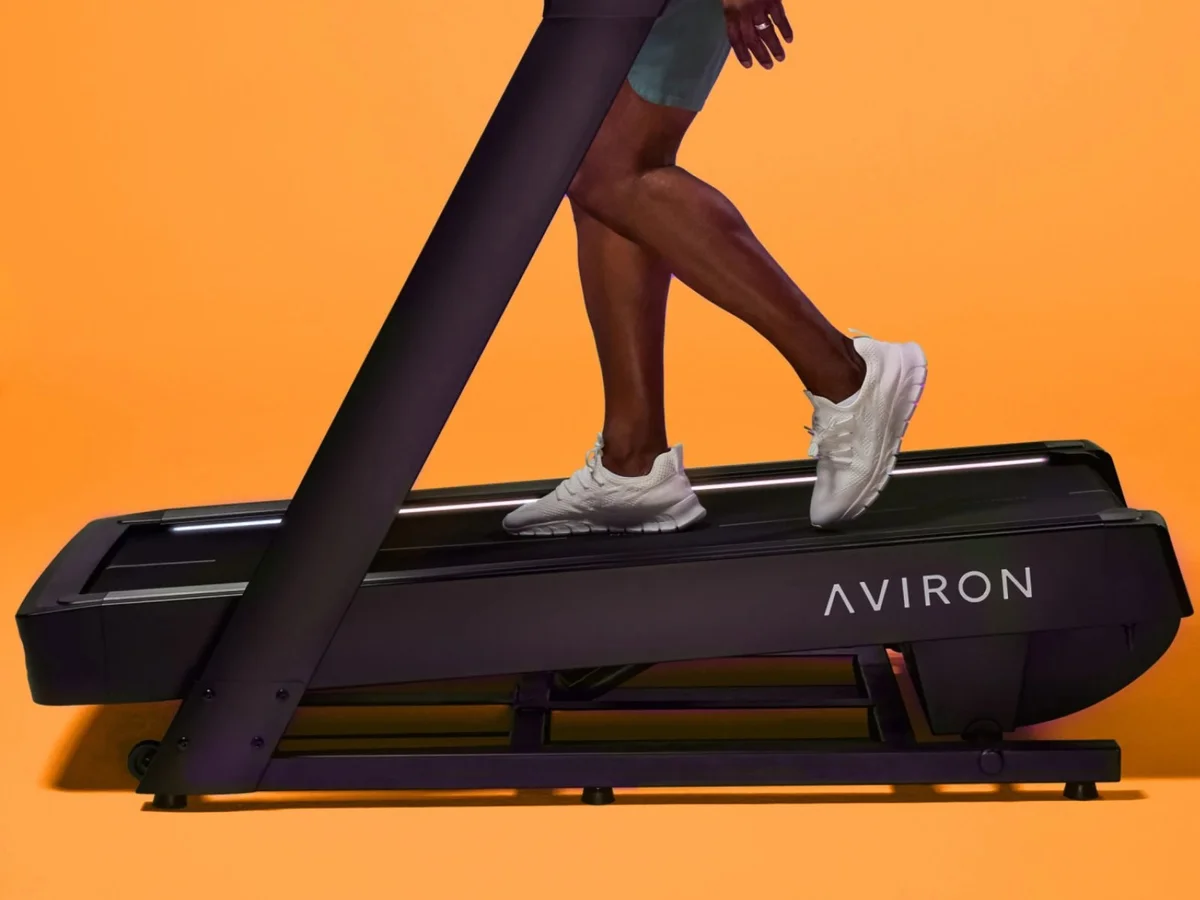

-6% to 42% incline, 14 mph, a 4.5 CHP motor and Aviron's largest, most cushioned deck at 22" x 61".
6. What Keeps Runners on the Treadmill Past Month Two?
No spec sheet lists this one, yet it decides whether you get your money's worth. Runners call it the dreadmill for a reason: 45 minutes of watching a console count up is how a good treadmill becomes an expensive clothes rack. People blame their willpower, but treadmills were engineered to be boring, while your phone was engineered to be hard to put down.
Aviron put that same game psychology into the treadmill. Aviron World adds points, streaks, levels and live competition to every run, with plenty built for runners:
- Training plans: 8-week Beginner and Intermediate Running Training Plans, 5K Race Prep with Annalisa, and Pace Lab, where coach David Pisanich teaches you to pace by feel over 8 workouts that finish with a full race simulation
- Races: Grand Prix (a 10-person race), Head to Head, Lightning Lap Knockout (the slowest runner each lap is out), and marathon pace challenges for Boston, Chicago, New York, Berlin, London and Tokyo
- Coached runs: HIIT Running with Meghan and Trail Blazer with Jared, which builds to a 12% climb
- Scenic runs: Colorado's red rock canyons, the cliffs at Peniche in Portugal and Zion National Park
- Your own shows: Netflix, YouTube, Hulu, Disney+ and more, with your run still tracked and synced to Strava
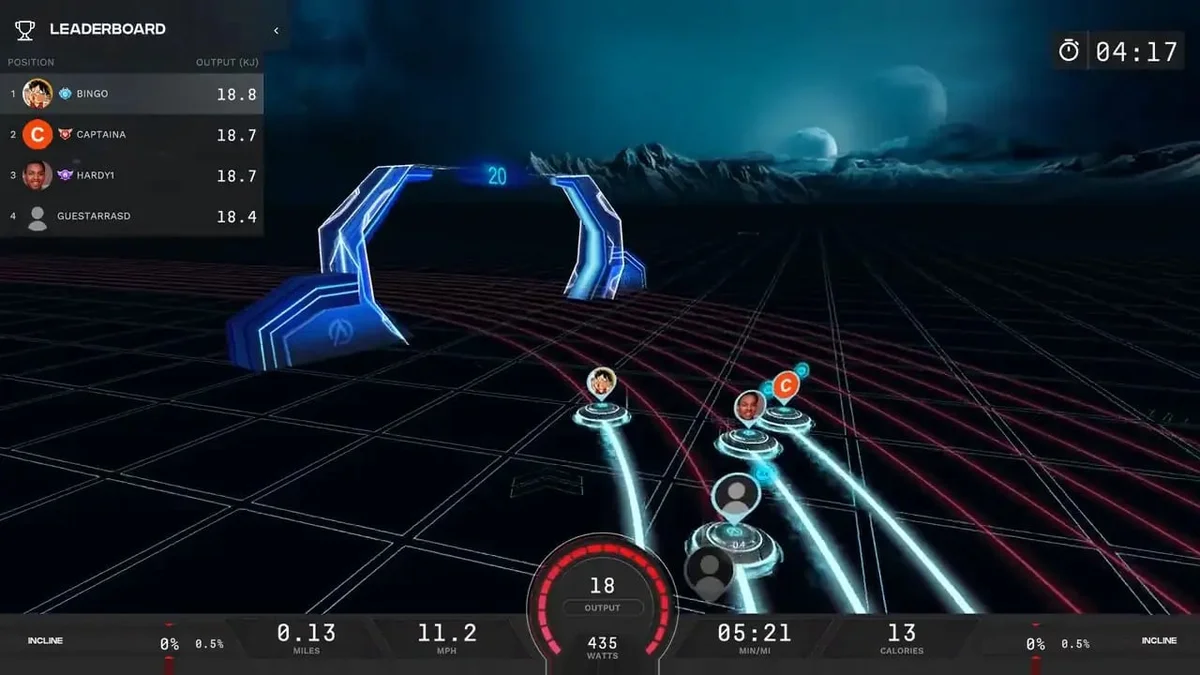
"Your attention shifts away from the workout clock and toward what is happening in the game," GGR tester Demetre Nelson said of the Podium. "It feels more like being on the playground than being on a treadmill."
Workouts that pull you back are a big part of why 92% of Aviron members are still working out a year later.
Which Aviron Treadmill Is Best for Running?
All three handle running. They differ on deck size, power, top speed, incline and folding:
| Justice | Podium | Summit | |
|---|---|---|---|
| Best for | New runners, run-walkers, small spaces | Most runners, high mileage, shared households | Hill and trail runners, downhill race prep |
| Motor | 3.5 CHP brushless | 4.5 CHP brushless | 4.5 CHP brushless |
| Top speed | 12.5 mph | 14 mph | 14 mph (lower on steep grades) |
| Incline | 0 to 15% | 0 to 18% | -6% to 42% |
| Deck | 20" x 59", 8 shock absorbers | 22" x 60", 8 shock absorbers | 22" x 61", 8 XL shock absorbers |
| Users up to | 6'6", 300 lb | 6'7", 350 lb | 6'8", 350 lb |
| Folds | Yes, to 53" x 34" | Yes, to 49" x 37" | No (67" long) |
| Screen options | 16" or 22" | 16", 22" or 27" | 16", 22" or 27" |
| Reviewers say | GGR: 4.5/5 | GGR: 4.4/5, "a good fit for advanced runners" | TreadmillReviews.net: Best for Gaming While Running |
Specs are from Aviron. Ratings are from Garage Gym Reviews and TreadmillReviews.net as of November 2026.
Which Running Treadmill Should You Choose?
Choose the Aviron Podium if:
- You run most days, do long runs or train for races
- You're tall, heavier, or sharing the treadmill with other runners
- You want 14 mph and 18% incline and still need it to fold
Choose the Aviron Justice if:
- You're new to running, mix runs with walks, or run a few times a week
- Space is tight: it folds to 53" x 34" and fits through a standard 36-inch doorway
Choose the Aviron Summit if:
- You train for hilly or trail races and want real decline
- It can stay set up for good. It doesn't fold, and for the full 42% Aviron recommends a ceiling at least 30 inches above your height

A 3.5 CHP brushless motor, 12.5 mph, 15% incline and a 20" x 59" deck, and it folds to a 53-inch footprint.
Still weighing them? Compare Justice, Podium and Summit side by side, or see how to train for a half marathon indoors.
Our verdict: For most runners, the Aviron Podium is the best running treadmill for home. It has the 22" x 60" deck, 4.5 CHP motor and 14 mph top speed that serious runners need, and it still folds. Choose the Justice if you're newer to running or short on space, and the Summit if hills and downhill training matter most. All three come with a 30-day risk-free home trial, so you can test one on your own runs.
Frequently Asked Questions
What is the best treadmill for running at home?
Look for a belt at least 60 inches long, a motor of 3.0 CHP or more (3.5 to 4.0 or higher for heavy use), a top speed of 12 mph or faster, a cushioned deck and power incline. Our pick for most runners is the Aviron Podium, which ticks every box and still folds. Newer runners with less space should look at the Justice, and hill runners at the Summit.
Is running on a treadmill easier than running outside?
Slightly, on a flat deck, because there's no air resistance and no wind. A 1% incline evens that out. Mechanically the two are close: a 2020 review of 33 studies found treadmill and outdoor running biomechanics largely comparable. Plenty of runners find treadmill runs feel harder in their heads, though, and that's a boredom problem more than a fitness one.
What incline should I use to simulate outdoor running?
Use 1%. Jones and Doust's 1996 study found a 1% grade best matched the energy cost of running outdoors at speeds of roughly 6.5 to 11 mph. At easy jogging paces the difference is small, so 0% to 1% works. Go higher only when you want hill training.
Is running on a treadmill bad for your knees?
Not for most people. A 2017 meta-analysis found hip or knee osteoarthritis in 3.5% of recreational runners, compared with 10.2% of sedentary non-runners and 13.3% of elite competitive runners. A cushioned deck also softens each landing compared with concrete. If you have knee pain or an injury, check with a doctor or physical therapist first.
How do I start running on a treadmill?
Start with walk-run intervals. Warm up with 5 minutes of walking, then alternate 1 minute of easy jogging with 2 minutes of walking for 20 minutes, three times a week, and add running time each week as it gets easier. Aviron's 8-week Beginner Running Training Plan and the 10 Minute Triumph series build that progression for you.
Three treadmills built for real miles, with races, training plans and scenic runs that make you want to come back for the next one.
30-day risk-free home trial · Free shipping · Financing available · HSA/FSA eligible


