HIIT Treadmill Workout: 5 Interval Sessions From 15 to 30 Minutes (Walkers to Sprinters)
Last updated November 2026
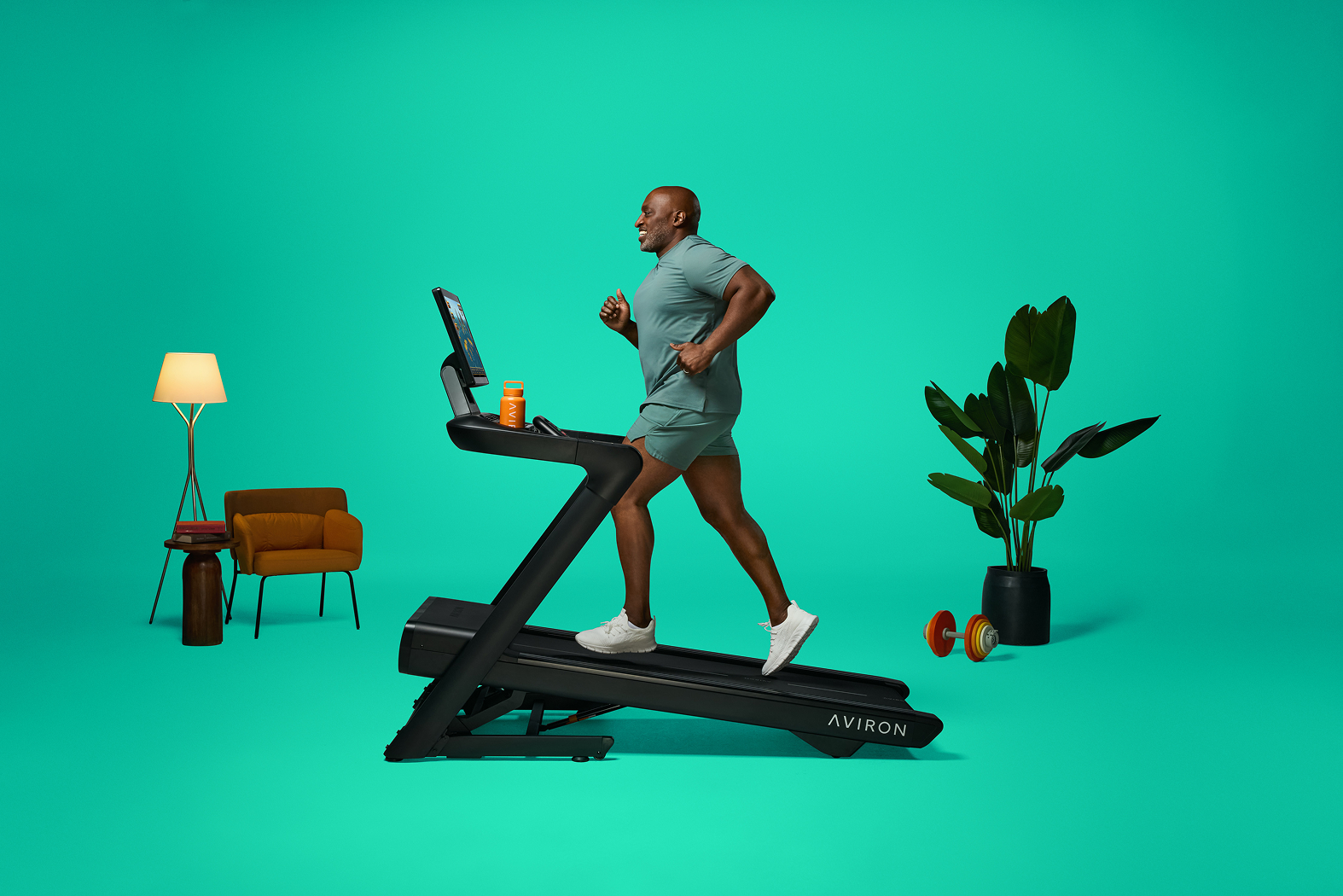
Short answer: A HIIT treadmill workout alternates short, hard efforts with easy walking or jogging. Hard intervals last 20 seconds to 4 minutes at about 8 or 9 out of 10 effort, and you can make them hard with speed, incline or both, so walkers can do HIIT too. A full session takes 15 to 30 minutes, warm-up included. Two or three sessions a week is plenty. The five workouts below run from a 15-minute incline walk to a research-backed 30-minute 4x4.
A treadmill gives you two dials for intensity: speed and incline. Runners can turn up the belt. Walkers can turn up the hill and reach the same breathless effort without running a step. And because the console shows your exact pace and grade, you can repeat a session next week and know whether you got fitter.
Every workout runs on any motorized treadmill, and the speeds are starting points. Where Aviron has a ready-made version, we'll name it.
| Workout | Level | Total time | Hard / easy | Intensity dial |
|---|---|---|---|---|
| 1. Incline Walk Intervals | Walkers and beginners | 15 min | 90 s / 60 s, 4 rounds | Incline |
| 2. The 30/60 Walk-Run | Beginner | 20 min | 30 s / 60 s, 8 rounds | Speed |
| 3. Hill Repeats | Intermediate | 20 min | 60 s / 60 s, 6 rounds | Incline and speed |
| 4. The Norwegian 4x4 | Intermediate to advanced | 30 min, plus a cool-down walk | 4 min / 3 min, 4 rounds | Speed or incline |
| 5. Short Sprints | Advanced | 20 min | 20 s / 100 s, 6 rounds | Speed |
In this article
- What does the science say about HIIT on a treadmill?
- How do you set speed and incline for treadmill HIIT?
- 1. A 15-minute incline walking HIIT workout
- 2. A 20-minute HIIT treadmill workout for beginners
- 3. Treadmill hill repeats
- 4. The 4x4 interval workout on a treadmill
- 5. A treadmill sprint workout
- How often should you do HIIT on a treadmill?
- How do you make treadmill HIIT less boring?
- Common treadmill HIIT mistakes
- FAQ
What Does the Science Say About HIIT on a Treadmill?
HIIT (high-intensity interval training) is one of the most studied ways to exercise. In the studies below, it built aerobic fitness at least as well as steady cardio in less time, and people enjoyed it more than you'd expect from something this hard.
| Study | What people did | What happened |
|---|---|---|
| Milanović 2015, meta-analysis | 28 studies, 723 healthy adults, HIIT vs steady endurance training | Both produced large VO2max gains; HIIT's were a little bigger |
| Gillen 2016, McMaster University | Sedentary men, 12 weeks: three 20-second sprints in a 10-minute session vs 45 minutes steady, 3 times a week (on bikes) | Peak oxygen uptake rose 19% in both groups, with a fifth of the time commitment |
| Helgerud 2007, running | 40 men, 8 weeks: four 4-minute runs at 90 to 95% of max heart rate vs steady running with the same total work | VO2max up 7.2% with the 4x4, significantly more than steady running |
| Wewege 2017, meta-analysis | 13 trials in overweight and obese adults, HIIT vs steady cardio | Similar fat loss, with HIIT taking about 40% less time; running programs had large effects either way |
| Bartlett 2011, running | Six 3-minute hard runs vs 50 minutes of steady running | Intervals scored 88 vs 61 for enjoyment, despite feeling harder; calories burned were about the same |
| Nemoto 2007, walking | 246 adults averaging 63 years old, 5 months: 3 minutes fast, 3 minutes slow vs steady walking | Thigh strength up 13 to 17% and walking fitness up 9%, all significantly more than steady walking |
Most of these studies are small and many used young men, so treat the percentages as a guide. And look at the last row: that group never ran a step. They walked fast enough to breathe hard for three minutes at a time.
Enjoyment counts, because the workout that gets you fitter is the one you keep doing. Short blocks with a clear finish line go by faster than 50 minutes of staring at the same number.
How Do You Set Speed and Incline for Treadmill HIIT?
Set your intervals by effort. Use a 1 to 10 scale and the talk test, then find the speed and incline that match. These numbers will get you started:
| Effort | Out of 10 | Talk test | Walkers (rough guide) | Runners (rough guide) |
|---|---|---|---|---|
| Easy (recovery) | 3 to 4 | Full sentences | 2.5 to 3 mph, 1 to 2% | Walk or easy jog, 3 to 5 mph |
| Hard | 7 to 8 | A few words at a time | 3 to 3.5 mph, 8 to 12% | Comfortably hard run, 6 to 8 mph |
| Very hard | 9 | No talking | 3.5 mph or faster, 12 to 15% | A sprint you can hold for 20 to 30 seconds |
Three treadmill rules make every session below work better:
- Press early. Motorized belts speed up gradually, so a speed key sets a target the belt takes a few seconds to reach. On the Aviron Podium you can set acceleration to 0.5 or 0.75 mph per second, so a jump from 6 to 10 mph takes about 8 or 5 seconds (calculated). Press a few seconds early, and start raising the incline about 10 seconds early, since it usually changes more slowly.
- Set 1% for running intervals. There's no wind on a treadmill, so a flat belt takes a little less effort than the road. A 1996 study found a 1% grade best matched the energy cost of outdoor running, over efforts of about five minutes at running speeds.
- Clip on the safety key. Always do it, especially for sprints.
A heart rate monitor takes the guesswork out of the 4x4 and tells you when you've actually recovered between intervals.

A lightweight armband that tracks real-time heart rate and calories over Bluetooth, with about 60 hours of battery.
1. What's a Good Incline Walking HIIT Workout? (15 Minutes)
Walkers and beginners · 15 minutes
- Warm up: 3 minutes at 2.5 to 3 mph, 1% incline
- Intervals: 4 rounds of 90 seconds at 10 to 12% incline, then 60 seconds at 2%. Keep the speed the same throughout, between 2.8 and 3.5 mph
- Cool down: 2 minutes easy at 1%
You never speed up. The hill does all the work, so your heart rate climbs while your feet stay at a walk. Start here if you're new to HIIT, coming back from time off, or not a runner.
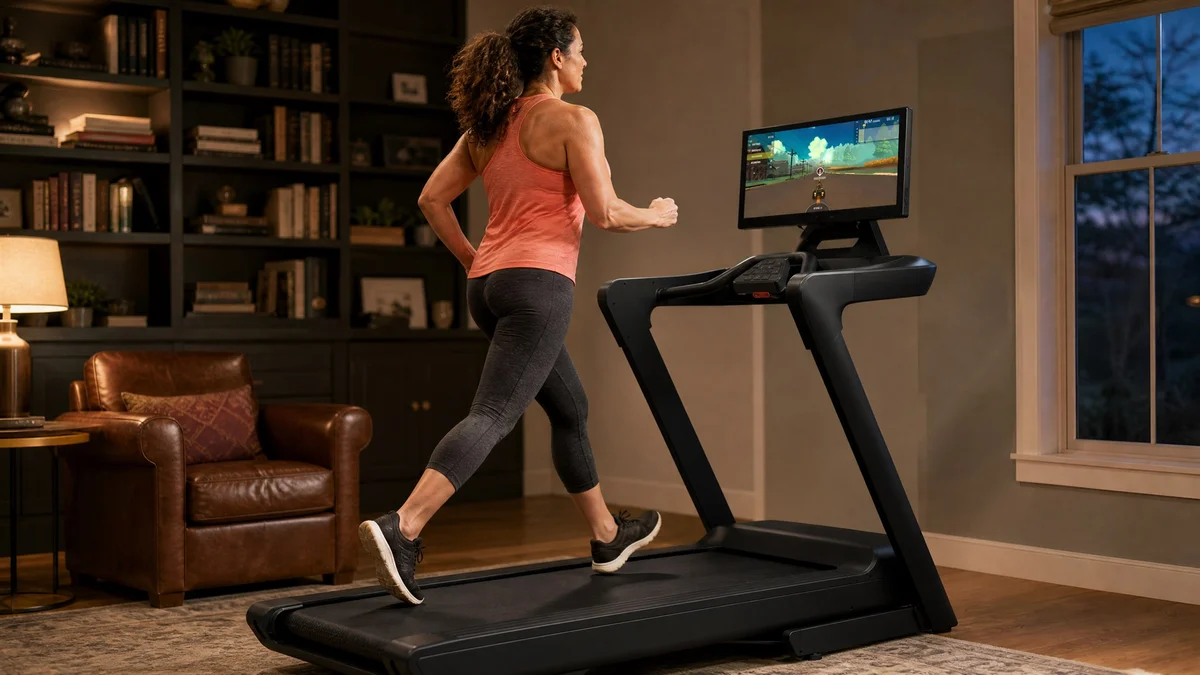
Incline is also a knee-friendly way to add effort. In a 2014 study, walking slowly (about 1.7 mph) up a roughly 10% grade cut peak knee compressive force by 23 to 35% compared with brisk walking (about 3.4 mph) on level ground. If your knees complain, slow the belt and keep the hill.
On Aviron treadmills, Clockwork (four incline interval walks, 10 to 16 minutes) and Short Stack (short walking intervals with rising incline) are the ready-made versions. If you prefer steady climbing, the 12-3-30 workout is this session's slower cousin.

Up to 15% incline and 12.5 mph with customizable speed keys, on a compact deck that folds upright with one hand.
2. What's a Good 20-Minute HIIT Treadmill Workout for Beginners?
Beginner · 20 minutes
- Warm up: 5 minutes, building from an easy walk to a brisk one, at 1%
- Intervals: 8 rounds of 30 seconds running at 7 out of 10 (for many people, 5 to 6.5 mph), then 60 seconds walking at 3 to 3.5 mph
- Cool down: 3 minutes easy walking
This is the classic first step from walking to running intervals. Thirty seconds is short enough to finish strong, and a minute of walking lets your breathing settle. Press the speed key about five seconds before each run so the belt is up to pace on time.
When all eight rounds feel controlled, cut the walks to 45 seconds or add 0.5 mph to the runs, but not both in the same week. On Aviron, HIIT Highway (fast 30-second intervals, 9 to 25 minutes) and the 10 Minute Triumph series follow the same idea. Short on time? Try these short treadmill workouts.
3. How Do You Do Hill Repeats on a Treadmill? (20 Minutes)
Intermediate · 20 minutes
- Warm up: 5 minutes, walk to easy jog, at 1%
- Intervals: 6 rounds of 60 seconds hard at 6 to 8% incline (a fast power walk at 3.5 to 4 mph, or a run at 5 to 7 mph), then 60 seconds easy walking
- Cool down: 3 minutes easy at 1%
Hills make you work hard at a slower speed. Keep your steps short and quick, stay tall, and drive with your arms. For the recoveries, leave the incline up and drop the speed to an easy walk. If you lower and raise the deck every minute, part of each interval goes to waiting for the incline to catch up.
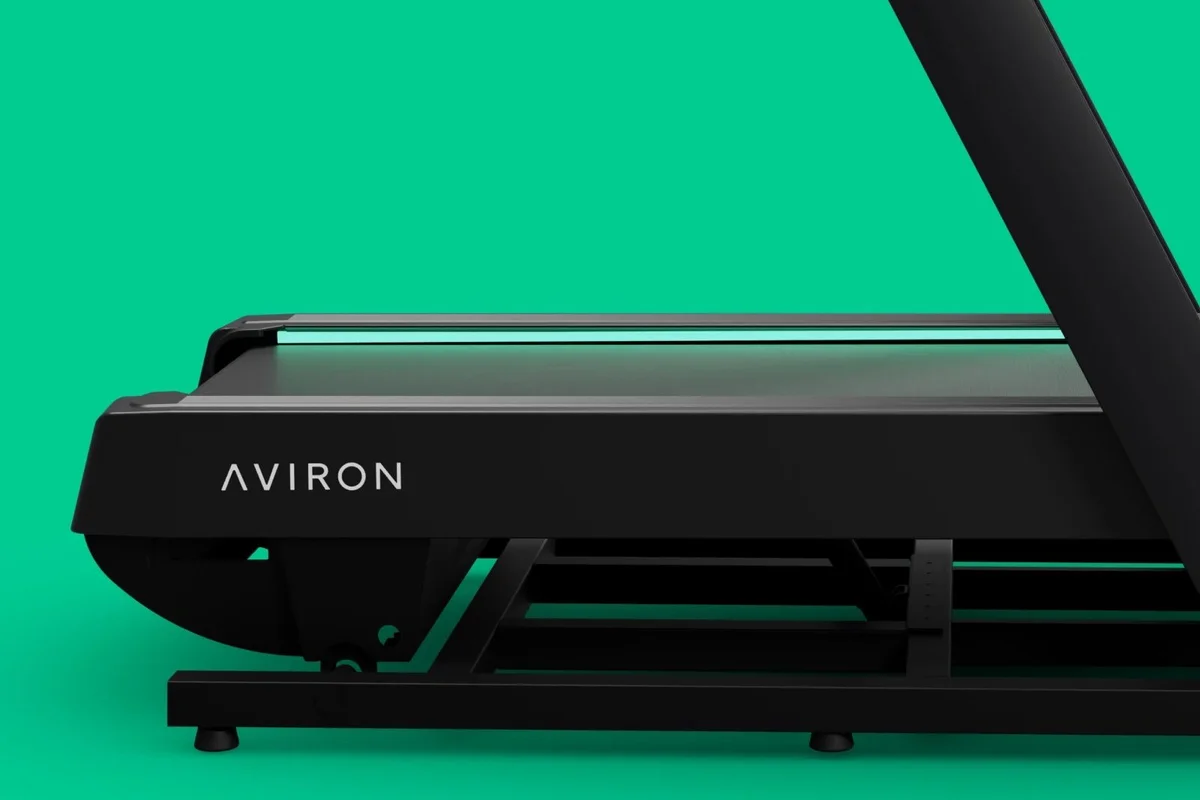
On Aviron, the six-class Hill Climb program mixes climbs, pyramids, ladders and HIIT in 20-minute sessions, and Peaks and Valleys Running alternates gradual climbs with hill intervals. How much grade do you actually need? Our incline treadmill guide breaks it down.

Incline from -6% to 42% on a 22 x 61-inch deck, with incline and speed keys built into the hiking handles.
4. How Do You Do the 4x4 Interval Workout on a Treadmill? (30 Minutes)
Intermediate to advanced · 30 minutes, plus cool-down
- Warm up: 5 minutes, walk to easy jog
- Intervals: 4 rounds of 4 minutes hard (8 to 9 out of 10, or 90 to 95% of your max heart rate), with 3 minutes of easy jogging or walking (about 70%) between them
- Cool down: walk until your breathing settles, 2 to 3 minutes
This is the protocol from the Norwegian study in the table above, and it's the one to pick if your goal is a bigger aerobic engine. Four minutes is long, so pace the first interval as if you had to do a fifth.
Runners can do it at a hard running pace with the deck at 1%. Walkers can do the same session as a steep power walk at 10 to 15% incline. Your heart doesn't care which dial you turned. Meghan's 8-workout HIIT Running series on Aviron (25 minutes each) works through flat intervals, sprints and hill challenges if you'd rather have a coach call it.
5. What's a Good Treadmill Sprint Workout? (20 Minutes, Advanced)
Advanced · 20 minutes
- Warm up: 5 minutes, walk to jog, with three 15-second pickups
- Intervals: 6 rounds of 20 seconds at sprint pace (9 out of 10), then 100 seconds of recovery: walk for 70 seconds, then jog for the last 30
- Cool down: 3 minutes easy walking
That adds up to two minutes of hard running, close to the McMaster study's three 20-second sprints. The jog at the end of each recovery gives you a rolling start. From a 6 mph jog, the Podium reaches 10 mph in about 5 seconds at its faster acceleration setting. From a 3.5 mph walk it would take nearly 9 seconds, almost half your sprint.
Ready for more? Add a round before you add speed. Sprinting also means trusting the machine under you. Here's Garage Gym Reviews tester Pete Nastasi on the Podium:
"I didn't notice any wobbling or shaking at any point when using this treadmill. This includes when I was walking on the steep 18% incline, or running at my top speed."
On Aviron, Quick Strike packs short sprints into 2 to 7 minutes, and Lightning Lap Knockout knocks out whoever has the lowest output at the end of each lap, racing up to five members or AI opponents.

A 4.5 CHP motor, 14 mph top speed and 18% incline on a 22 x 60-inch deck, with belt acceleration you can set to 0.5 or 0.75 mph per second.
How Often Should You Do HIIT on a Treadmill?
Two or three times a week, with easier days in between. The American Council on Exercise recommends 48 to 72 hours between HIIT sessions. In research it summarizes, fitness gains were about the same at two, three or four sessions a week, while longer sessions and more weekly HIIT predicted more people quitting. So start with two sessions you'll actually do.
A simple week to start with:
- Monday: Workout 1 or 2
- Wednesday: an easy 30-minute walk, scenic route optional
- Friday: Workout 3 or 4
- Weekend: a game or race at whatever pace feels fun
How Do You Make Treadmill HIIT Less Boring?
Intervals fix the time problem. They don't fix boredom, and boredom is what turns a treadmill into an expensive clothes rack by month two. That's the motivation cliff, and it isn't a willpower problem. Most treadmills were built to be boring: a belt, a clock and a number counting up. Your phone, meanwhile, was built to be hard to put down.
Aviron took that same game psychology (points, streaks, levels and live competition) and built it into the treadmill. Here's GGR tester Demetre Nelson on the Podium:
"When I change my effort and immediately see something happen in the game, it gives me a reason to push a little harder or try again."
On Justice, Podium and Summit you'll find:
- Power Play intervals: HIIT Highway, HIIT Walkway, HIIT Runs and HIIT Walks, Clockwork, Redline and Quick Strike
- Coached series: HIIT Running with Meghan, Hill Climb, Jenny's Power Walking, and Les Mills workouts
- Races: Grand Prix, Lightning Lap Knockout and Olympic race walks, for when you want someone to beat
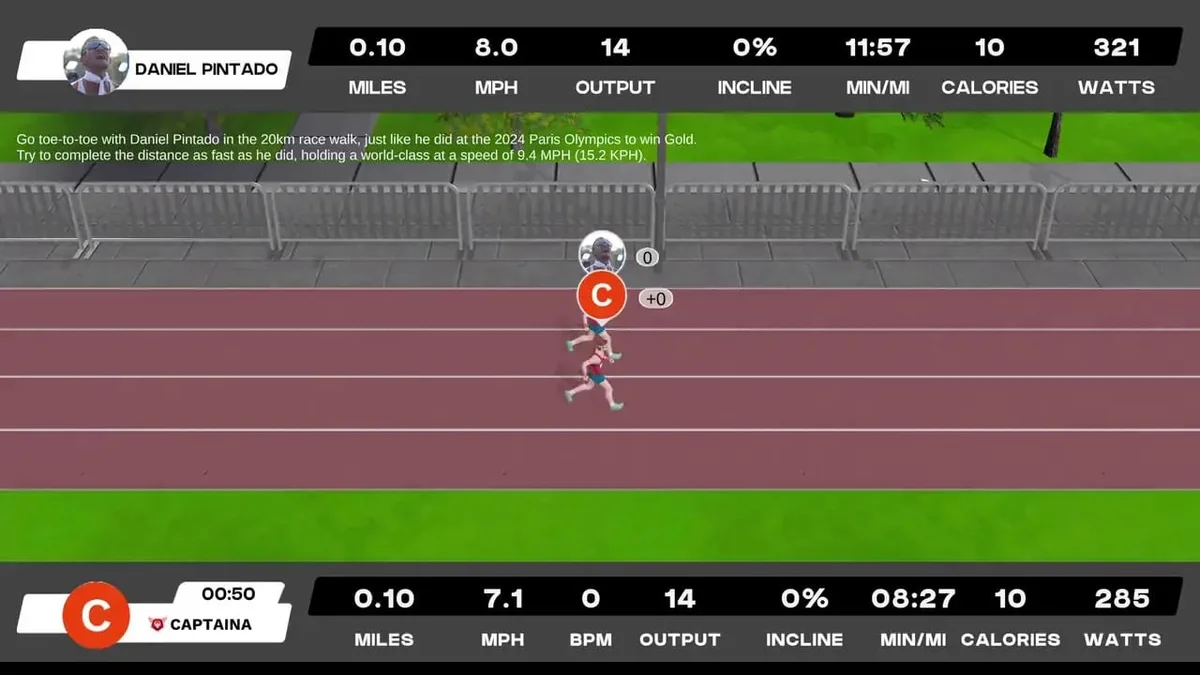
Workouts that pull you back are a big part of why 92% of Aviron members are still working out a year later. See the full menu in Aviron World, or compare the three machines in Justice vs Podium vs Summit.
What Are the Most Common Treadmill HIIT Mistakes?
- Jumping on and off a moving belt. Resting on the side rails is fine. Stepping back onto a belt doing 10 mph is how people fall. Let the belt change speed instead.
- Hanging on to the console. Holding on makes incline intervals easier than the numbers say.
- Starting sprints from a walk. The ramp-up eats your interval. Use a rolling start.
- Making every session a HIIT session. Your body adapts on the easy days, so keep one between hard sessions.
Frequently Asked Questions
Is HIIT on a treadmill effective?
Yes. A 2015 meta-analysis of 28 studies found HIIT improved VO2max, the standard lab measure of aerobic fitness, slightly more than steady endurance training. A treadmill works well for it because you can change both speed and incline and repeat exact sessions week to week.
Can you do HIIT by walking on a treadmill?
Yes. Raise the incline for the hard intervals and keep walking. In a 5-month study of adults averaging 63, alternating 3 minutes of fast walking with 3 minutes of slow walking improved thigh strength and fitness more than steady walking. Start with Workout 1.
How long should a HIIT treadmill workout be?
15 to 30 minutes, including warm-up and cool-down. The hard work itself usually adds up to 2 to 16 minutes. If you can comfortably go much longer, the hard intervals probably aren't hard enough.
What speed should I sprint at on a treadmill?
There's no universal number. Pick a speed you could hold for about 30 seconds with good form, then use it for 20-second sprints. If your form falls apart before the interval ends, drop 0.5 mph. Raise it only once all six rounds feel controlled.
Is treadmill HIIT good for weight loss?
It can help. A 2017 meta-analysis found HIIT and steady cardio reduced body fat by similar amounts, with HIIT taking about 40% less time, and running-based programs had large effects either way. Results still depend on consistency and diet. If you have a heart condition or haven't exercised in a while, check with your doctor before doing high-intensity work.
Justice, Podium and Summit come loaded with interval games, coached HIIT series and live races. The hard part is stopping.
Shop Aviron Treadmills →30-day risk-free home trial · Free shipping · Financing available · HSA/FSA eligible


