Smart Home Fitness Equipment vs Traditional Gyms: Which Delivers Better Results?
Last updated November 2026
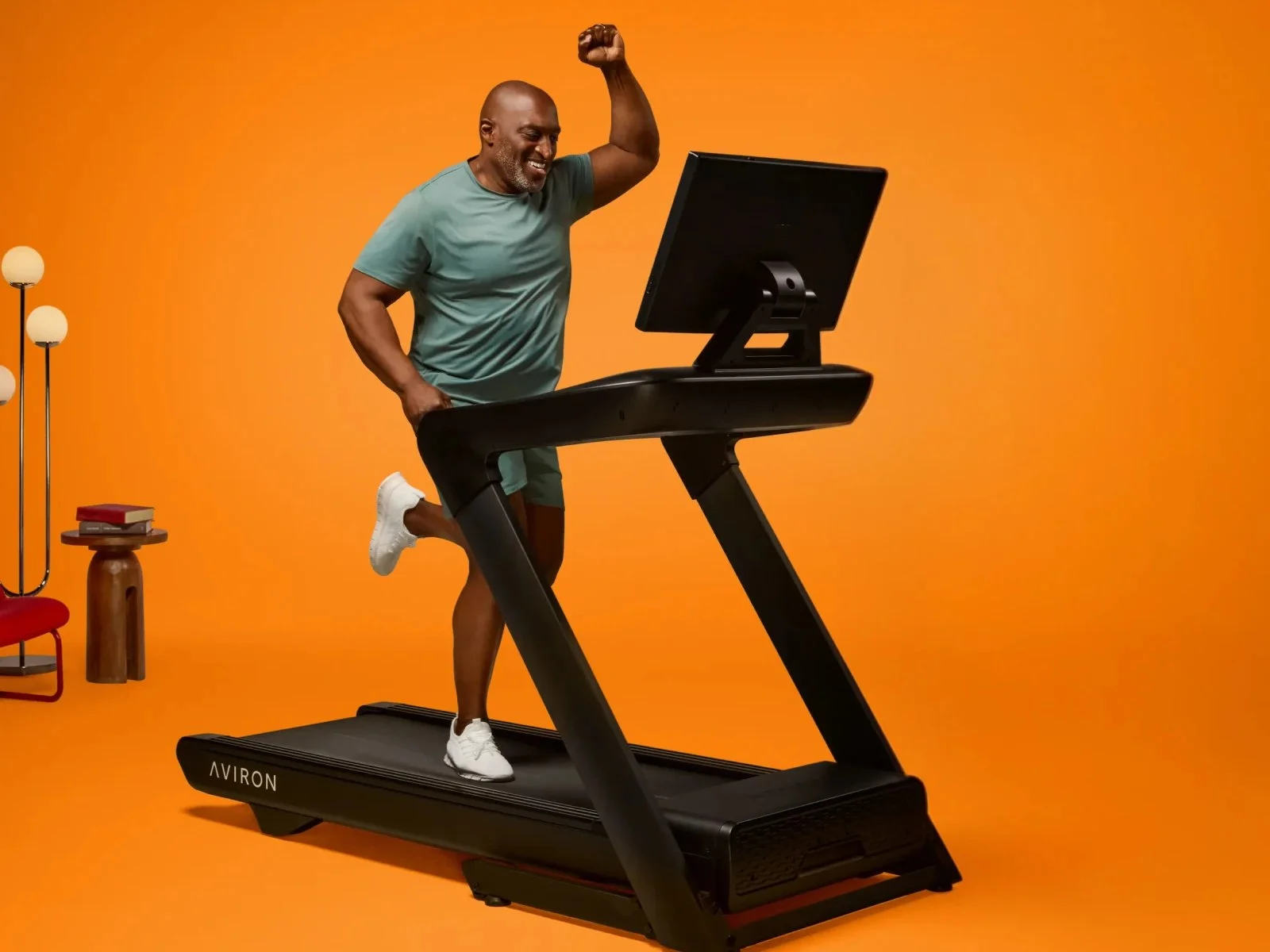
Short answer: For most busy adults, smart home fitness equipment delivers better results over a year, because it gets used more. In trials comparing home and gym-style programs, fitness improved by about the same amount, and people often kept up the home programs longer. A gym still wins if you want heavy strength training or a coach watching your form.
The gym has more equipment. Your home has the shorter commute. Which one gets you fitter mostly depends on which one you'll still be using in six months, and most home gym vs gym comparisons never ask.
We read the trials that compared home exercise with supervised, center-based programs, plus research on how often gym members actually go.
In this article
- Which delivers better results, home equipment or a gym?
- What does the research say?
- Why do people stick with home workouts longer?
- Where does a traditional gym still win?
- What makes smart home equipment different from a regular treadmill?
- Home gym vs gym membership: how do they compare?
- Which should you choose?
- FAQ
Which Delivers Better Results, Home Equipment or a Gym?
Neither one does it by itself. Your heart, lungs and legs can't tell whether the treadmill is in a gym or your spare room. Results come from how hard you work and how often you show up, week after week, so the deciding factor is which one you'll use more.
On that, the evidence leans toward home. When researchers have compared the two head to head, fitness gains came out about even, and the home groups usually kept exercising longer.
What Does the Research Say?
Nobody has run a trial of a smart treadmill against a gym membership, so we looked at the closest evidence: studies comparing home-based exercise with supervised, center-based programs, plus research on how people use their gyms.
| Study | Who and what | What happened |
|---|---|---|
| King 1991, Stanford | 357 sedentary adults aged 50 to 65, assigned to group exercise classes or home exercise for a year | Fitness improved about equally, and the home groups stuck with their exercise better at 12 months |
| Perri 1997, University of Florida | 49 women with obesity in a year-long weight loss program, walking with a supervised group or at home | At 12 months the home group exercised more. At 15 months it had lost significantly more weight |
| Ashworth 2005, Cochrane review | 6 trials comparing home and center-based exercise in adults 50 and older | Home programs had better adherence, especially long term. In the largest trial, 68% of the home group was still exercising at two years, vs 36% of the center group |
| McDonagh 2023, Cochrane review | 24 trials, 3,046 heart patients doing cardiac rehab at home or in a center | No difference in exercise capacity or quality of life for up to 12 months, and similar completion rates |
| Lacroix 2017, meta-analysis | 11 studies of healthy adults 65 and older doing supervised or unsupervised strength and balance training | Supervised training built more strength and balance |
| Sperandei 2016, Brazil | 5,240 new members of a fitness center in Rio de Janeiro | 63% stopped going before their third month. Fewer than 4% kept going for a full year |
| DellaVigna 2006, UC Berkeley | 7,752 members of three US health clubs, tracked over three years | Members on monthly plans of over $70 paid more than $17 per visit, when a 10-visit pass worked out to $10 a visit |
Several of these studies involve older adults or people with health conditions, so the results won't map perfectly onto a busy 40-year-old. They do point the same way: exercise at home works about as well, and people tend to do more of it.
Why Do People Stick With Home Workouts Longer?
Mostly because there's less standing between you and the workout. A gym session comes with extra steps: pack a bag, drive, park, wait for a machine, drive home. On a busy day, every one of those is a chance to bail. At home, the walk to your treadmill takes about 20 seconds.
The Florida trial shows how that adds up. Both groups were told to walk 30 minutes a day, five days a week. For the first six months, both did well. By 12 months the home walkers were exercising more, and three months after that they'd lost more weight on the same walking prescription.
Home also removes a few quieter barriers. Nobody watches you while you're out of shape, there's no line for the treadmill at 6 p.m., and the weather and opening hours stop mattering. Workouts can also fit into the gaps in your day. Ten minutes before the kids wake up counts. So does a slow walk during a conference call.
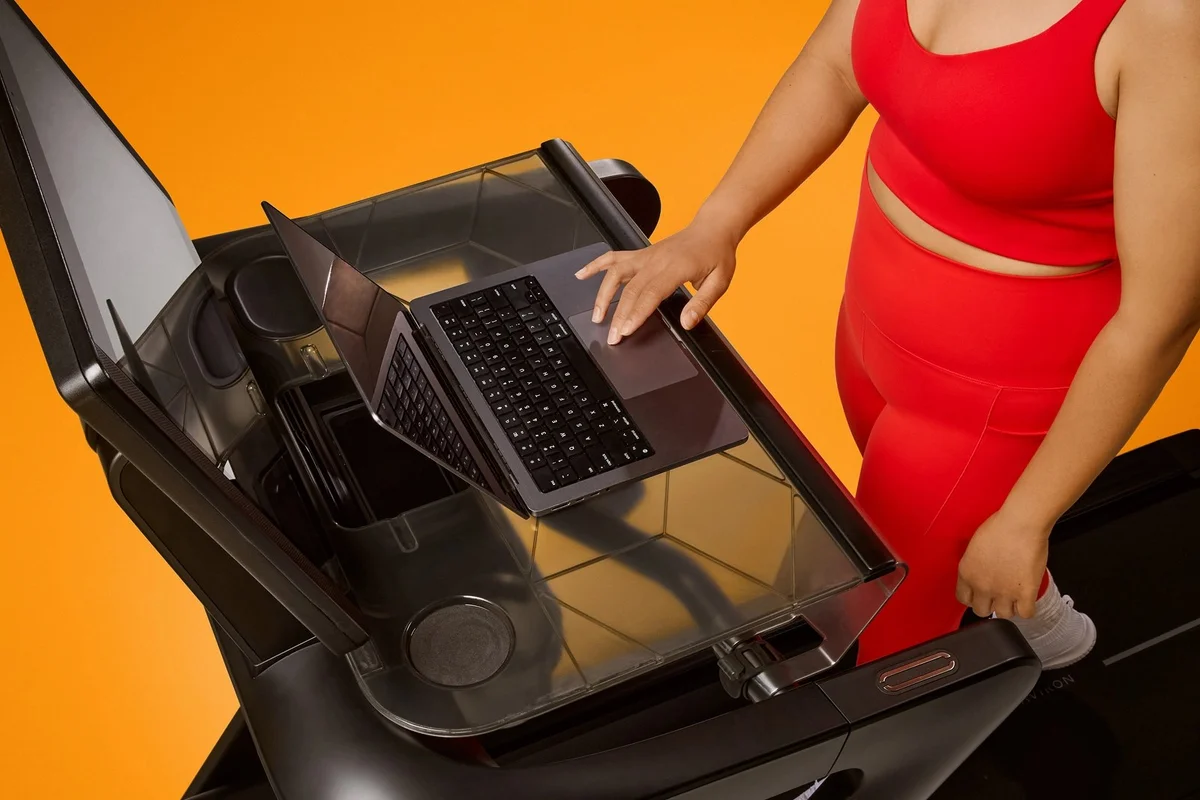

Up to 15% incline and 12.5 mph on a compact deck that folds upright with one hand. Add the WalkDesk and it doubles as a walking desk.
Where Does a Traditional Gym Still Win?
A gym does a few things that are hard to match at home:
- Heavy strength training needs squat racks, cable machines and a full rack of dumbbells, which take space and money most homes don't have. The Lacroix review also found that supervised strength and balance training beat unsupervised programs, so a coach correcting your form is worth something.
- If you're bored of the treadmill, the gym has dozens of other machines. Your spare room has one or two.
- Classes come with people who expect to see you, and for some of us that's what gets us out the door.
- A membership is cheap to start. A good treadmill is a bigger purchase upfront, though the math can flip within a few years if you use it often.
All of that only helps on the days you go, and in the Rio study, 63% of new members had stopped going before their third month.
What Makes Smart Home Equipment Different From a Regular Treadmill?
A regular home treadmill fixes the friction problem and creates a new one: boredom. Week one is great, week three is a chore, and by month two it's an expensive clothes rack. We call that the motivation cliff, and it isn't a willpower problem. Most cardio machines were built to be boring. Your phone was built to be hard to put down.
Smart equipment borrows from the phone, and the research supports it:
- In the STEP UP trial, 602 adults across 40 US states earned points and levels for hitting step goals, with support, collaboration or competition built in. All three versions beat the control group. Competition worked best, adding about 920 steps a day, and it was the only version still ahead three months after the game ended.
- A 2022 meta-analysis of 16 randomized trials found that game elements increased physical activity, beat comparable programs without them, and kept a smaller effect after the programs ended.
That's the thinking behind Aviron's Engagement Engine. Game psychology (streaks, progress, instant feedback and competition) is built into every workout on the Justice, Podium and Summit treadmills. You might play science-backed games like Blaster Brigade and Blaze Breakers, climb and descend in SkyQuest, race your own past runs in Tracks, take a Les Mills class or walk a scenic route. Your streaming apps run on the same screen.

That design is a big part of why 92% of Aviron members are still working out a year later. The figure measures something different, in a different group of people, from the Rio study, so it isn't a head-to-head comparison.

A 4.5 CHP motor, 14 mph top speed and 18% incline on a 22 x 60-inch deck, with races, coached classes and scenic runs on screen. It still folds.
Home Gym vs Gym Membership: How Do They Compare?
| Smart home treadmill | Traditional gym | |
|---|---|---|
| Getting started | About 20 seconds from your couch | Travel each way, plus waits at busy times |
| Upfront cost | A bigger one-time purchase (financing helps) | Low sign-up cost |
| Ongoing cost | A monthly membership for the smart content, shared by the household | Monthly dues per person, whether you go or not |
| Hours | Whenever you're home | Opening hours and peak-time crowds |
| Equipment range | One or two machines | Dozens of machines, racks and free weights |
| Coaching | On-screen classes and guided programs | In-person trainers, usually at extra cost |
| Competition and progress | Built in: leaderboards, streaks, stats | Up to you (or your class) |
| Sticking with it | Home groups kept going longer in several head-to-head trials | 63% of new members quit within three months in the Rio study |
Whether home saves you money depends on how often you'll use it. Our cost-per-workout breakdown shows how to run the numbers for your own situation.
Which Should You Choose?
Choose a gym if:
- Lifting heavy is your main goal and you want racks, plates and cables
- A coach or a class is what gets you out the door, and you'll actually go
- There's a good one a few minutes from home or work
Choose smart home equipment if:
- Time and travel are what usually kill your routine
- You've joined a gym before and drifted off by spring
- You want cardio you can do at 6 a.m. or 10 p.m. without planning
- You get bored easily and need something that pulls you back
Or do both. One common split is a treadmill at home for cardio and the gym twice a week for lifting. For older adults, the Lacroix review suggested making two of every three strength sessions supervised, which fits that split well.
If you go the treadmill route, pick by how you like to move. The Justice suits walkers and smaller rooms, the Podium is built for runners, and the Summit is for steep incline hiking. Our Justice vs Podium vs Summit guide goes deeper.

Incline from -6% to 42% on a 22 x 61-inch deck, one of the steepest home treadmills you can buy, with incline and speed keys built into the hiking handles.
Frequently Asked Questions
Is a home gym worth it?
It is if you'll use it more than you'd use a gym. In the trials above, people exercising at home kept going longer than people in center-based programs, and a machine you use four times a week costs less per workout every month you own it. If heavy lifting is your main goal, a gym is probably better value.
Does working out at home actually work?
Yes. In the Stanford trial, adults exercising at home improved their treadmill fitness as much as those in supervised group classes. A 2023 Cochrane review of 24 cardiac rehab trials found the same pattern: home and center programs produced similar gains in exercise capacity.
Is a home gym cheaper than a gym membership?
Not upfront, but often over time, depending on how much you use it. Gym dues keep coming whether you go or not, and the Berkeley study found members on monthly plans paid more than $17 per visit when a 10-visit pass would have cost them $10. A home machine's cost per workout drops every time you use it. Financing and HSA/FSA eligibility can soften the upfront cost.
Can you build muscle without a gym?
Yes, especially as a beginner. Bodyweight exercises, adjustable dumbbells and resistance bands build real strength at home, and incline walking works your glutes and calves. For maximum size and strength you'll eventually want heavier loads than most homes have room for, and that's where a gym earns its fee.
How many people quit the gym?
A lot. In a study of 5,240 new members at a Rio de Janeiro fitness center, 63% stopped going before their third month and fewer than 4% kept going for a full year. Home exercise has drop-off too, but in several trials comparing the two, people stuck with home programs longer. Our guide to why exercise feels easier when you enjoy it covers what helps.
Justice, Podium and Summit bring science-backed games, coached classes, scenic routes and your streaming apps to a treadmill that fits your home.
30-day risk-free home trial · Free shipping · Financing available · HSA/FSA eligible


