Rowing Machine Benefits: 9 Science-Backed Reasons to Row (and Why Most People Never Get Them)
Last updated November 2026
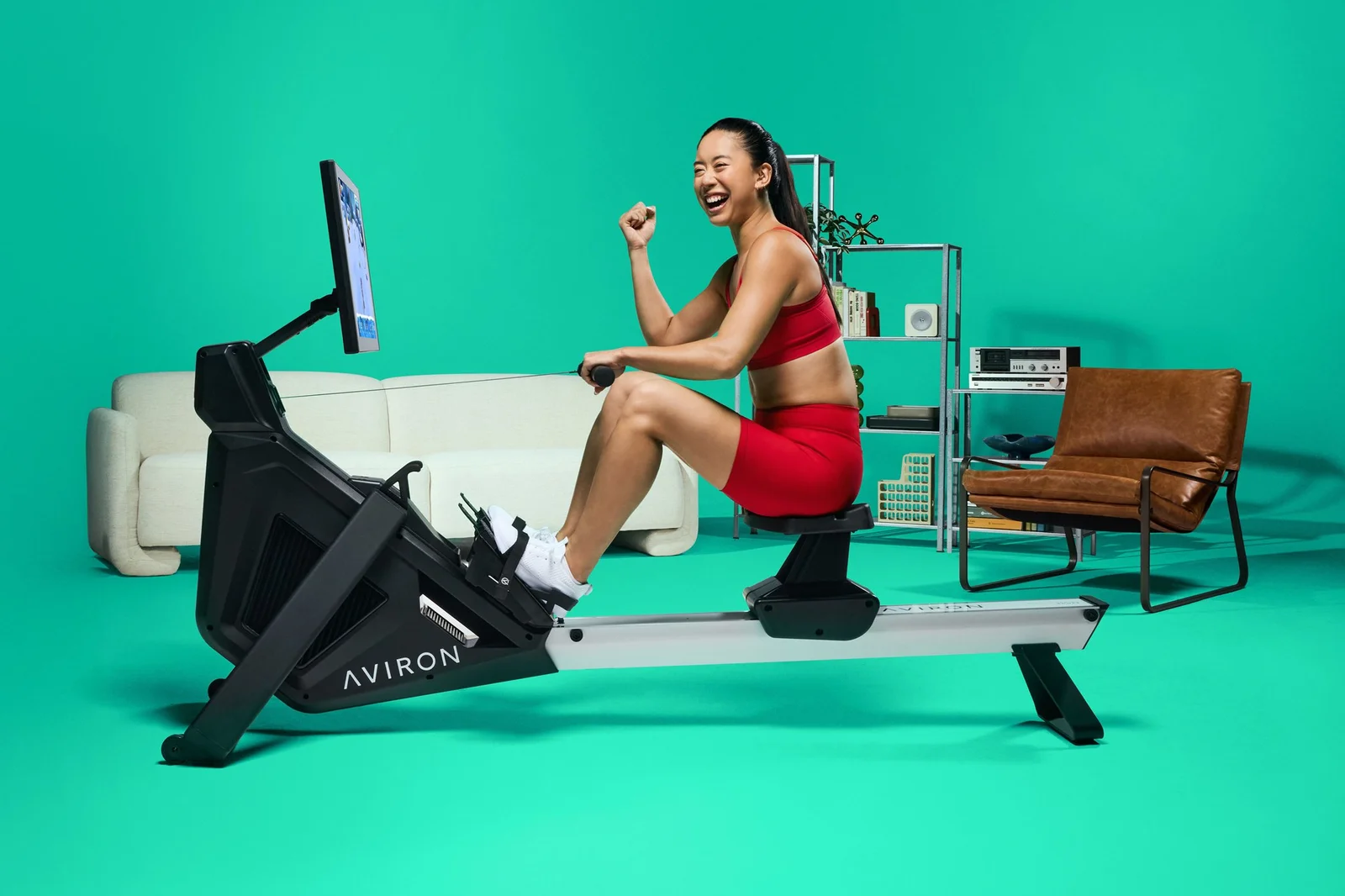
Short answer: A rowing machine works your legs, core, back and arms on every stroke and trains your heart and lungs at the same time, without pounding your joints. In trials lasting 8 to 12 weeks, rowing-based programs also improved strength, blood sugar control and bone density. The catch: you have to keep rowing long enough to get there.
Most lists of rowing machine benefits stop at "full body, low impact, burns calories," which is true but vague. So we went to the research: trials where real people, many of them over 60, rowed two or three times a week for a couple of months.
Nine benefits have solid evidence behind them. They take weeks to show up, though, and most people quit before they do. More on that at the end.
In this article
- Is rowing a good workout?
- What does the research say about rowing machine benefits?
- The 9 benefits of a rowing machine
- How long does it take to see results from rowing?
- Why do most people never get these benefits?
- FAQ
Is Rowing a Good Workout?
Yes. Rowing is one of the few workouts that trains cardio and strength in the same movement. Each stroke starts with a leg press, swings through your hips and core, and finishes with a pull from your back and arms, so most of your major muscles work on every rep.
It also pushes your heart and lungs as hard as running does. In a small Laurentian University study, nine healthy men reached about the same peak oxygen uptake on a rower as on a treadmill. You just get there sitting down, with your feet strapped in and nothing hitting the ground.
What Does the Research Say About Rowing Machine Benefits?
Most of the benefits below come from these six studies. They're mostly small, so treat the numbers as rough guides.
| Study | What people did | What happened |
|---|---|---|
| Araujo 2023, Brazil | 23 post-menopausal women, average age 66, rowed 30 minutes three times a week at 60 to 80% of peak heart rate for 10 weeks | Higher peak oxygen uptake, more blood pumped per heartbeat, faster heart rate recovery. Rowing fitness had improved by week 6 |
| Lin 2022, Taiwan | 38 older adults with mild knee osteoarthritis: rowing with on-screen feedback vs conventional resistance exercise, twice a week for 12 weeks | The rowers ended up with stronger hips and knees, better knee scores and better functional fitness |
| Petersen 2022, Denmark | 48 men (with type 2 diabetes, with obesity, or lean) did intervals on rowing and cycling machines three times a week for 8 weeks | Insulin sensitivity up about 30 to 40%, VO2max up 8 to 15%, less fat and more lean mass in every group. Over 95% attendance, no injuries |
| Clausen 2024, California | 14 active adults did the same short sprint workout (three 20-second all-out efforts) on a rower and on a bike | The rower burned more energy during the session: about 95 calories vs 82 |
| Murata 2023, Japan | 50 women aged 65 to 79: rowing, an inulin fiber supplement, both, or neither, for 12 weeks | Bone mineral density rose in all three active groups compared with the control group, including rowing alone |
| Filipovic 2021, Canada | 9 healthy men did max-effort tests on a treadmill, an elliptical and a rower | Peak oxygen uptake was about the same on all three machines |
The people in that table include women in their mid-60s, older adults with sore knees and men with type 2 diabetes, so you don't need to be an athlete for rowing to work.
1. It Works Your Whole Body in Every Stroke
Each phase of the stroke hands off to different muscles: quads, glutes and hamstrings on the leg push, core and lower back as your torso swings back, then lats, shoulders and arms as you pull the handle to your ribs.
When Japanese researchers studied 60 rowers with motion capture and MRI scans, the leg drive, trunk swing and arm pull each contributed power, and they concluded that rowing "requires a well-balanced distribution of muscle mass throughout the body." Your legs do the most work, which is why good form goes legs first, arms last. Our guide to what muscles a rowing machine works goes muscle by muscle.
2. It Builds Real Cardio Fitness in About 10 Weeks
In the Brazilian trial, women in their mid-60s rowed for 30 minutes, three times a week, at 60 to 80% of their peak heart rate. After 10 weeks, their peak oxygen uptake, the amount of blood their heart pumped with each beat, and how quickly their heart rate came down after exercise had all improved. By week 6 they could already hold more watts at a lower heart rate.
That 60 to 80% zone is a pace where you can talk in short sentences but wouldn't want to sing. A heart rate monitor takes the guesswork out of staying in it.

A Bluetooth heart rate monitor with about 60 hours of battery that tracks heart rate and calories, so you know when you're in the 60 to 80% zone the study used.
3. It's Low Impact, So It's Easy on Your Knees
Running lands you on one leg with every stride. On a rower you never leave the seat, your feet stay strapped to the footplates, and the force goes into the machine.
That makes rowing a good fit for people with cranky joints, and the Taiwanese trial tested exactly that. Thirty-eight older adults with mild knee osteoarthritis either rowed with on-screen feedback or did conventional resistance exercise, twice a week for 12 weeks. The rowers came out with stronger hips and knees, better knee scores and better functional fitness than the comparison group.
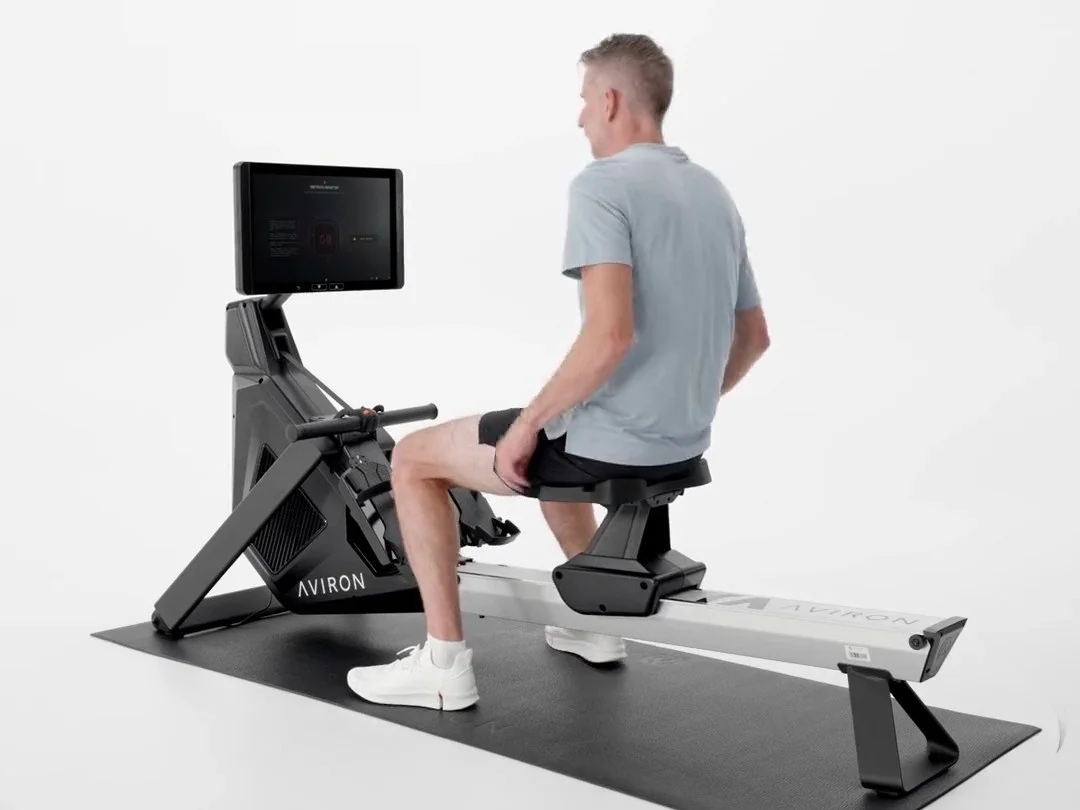
Seat height matters too, since a low seat means a deep squat every time you get on or off. Here's DebraAnn, a 67-year-old Strong Series owner:
"I'm 67 and have a disability... my doctor was the first to talk about a rower... I'm now on my 6th week straight of using it daily with no issues or problems on my part."
4. It Builds Everyday Strength
Every stroke is a leg press against resistance, so rowing builds muscle as well as fitness. In the knee osteoarthritis trial, the rowers' hip and knee muscles tested about 4 to 9 pounds stronger than the comparison group's after 12 weeks. In the Danish trial, men doing rowing and cycling intervals gained lean mass and lost fat at the same time.
Rowing won't replace heavy lifting if you're chasing big muscles. For the strength you use every day, like climbing stairs or getting up off the floor, it covers a lot of ground. On a machine with adjustable resistance, slower strokes at a higher level shift the work toward strength.

A seat about 20 inches off the floor, 16 levels of dual air and magnetic resistance, room for rowers up to 6'8" and 507 lb, and it stores upright with no wall mount.
5. It Burns a Lot of Calories per Minute
More muscle working means more energy burned. Based on standard exercise MET values, a 155-pound person burns roughly 260 calories in 30 minutes of moderate rowing and around 445 in hard intervals.
The California study put that to a direct test. The same sprint workout burned more energy on a rower than on a bike: about 95 calories versus 82 for the session. The bike produced slightly more afterburn, though not enough to make up the difference. Full numbers by body weight are in how many calories rowing burns.
6. It Gets a Lot Done in a Short Workout
Short on time? That sprint workout contained exactly one minute of hard rowing. In the Danish trial, three interval sessions a week for 8 weeks raised VO2max, a key marker of heart and lung fitness, by 8 to 15%.
You don't have to do intervals every time, but on busy days 15 or 20 minutes with a few hard efforts is time well spent. Our HIIT rowing workouts run from a 10-minute starter to a 30-minute session.
7. It Can Improve Blood Sugar Control
The Danish trial included men with obesity and type 2 diabetes, men with obesity but normal blood sugar, and lean men. After 8 weeks of rowing and cycling intervals, insulin sensitivity rose by about 30 to 40% in all three groups, and HbA1c (a roughly three-month blood sugar average) dropped in the men with diabetes.
Attendance topped 95% and nobody got hurt. The study wasn't randomized and included only men, so treat it as promising rather than proven. If you take medication that lowers blood sugar, check with your doctor before starting intervals.
8. It May Help Protect Your Bones
Rowing isn't weight-bearing the way walking is, so most people don't think of it for bone health. The Japanese study suggests it's worth a second look. Fifty women aged 65 to 79 spent 12 weeks rowing, taking an inulin fiber supplement, doing both, or doing neither. Bone mineral density increased in all three active groups compared with the women who did nothing, including the group that only rowed.
It's one small study and no substitute for your doctor's advice on bone health, but it's a nice bonus. Starting later in life? Our guide to rowing for seniors covers how to ease in.
9. It's Good for Your Head
Exercise is one of the best-studied treatments for depression. A 2024 BMJ review of 218 trials found that walking or jogging, strength training and mixed aerobic exercise all reduced symptoms, and the benefit grew with intensity. The review didn't single out rowing, but rowing sits right where those overlap: aerobic and resistance work in one movement, at whatever intensity you choose.
The authors suggest using exercise alongside therapy and medication, not instead of them. Plus, the steady rhythm of an easy row is a decent way to switch your brain off for half an hour.
How Long Does It Take to See Results From Rowing?
Based on these studies, plan on 6 to 12 weeks of rowing two or three times a week:
- Weeks 1 to 2: the stroke starts to feel natural and you stop thinking about the sequence.
- By week 6: rowing feels easier at the same effort. The Brazilian group held more watts at a lower heart rate.
- Weeks 8 to 12: the changes researchers measured showed up: VO2max, strength, insulin sensitivity and bone density.
Most of these programs were two or three sessions a week of about 30 minutes, or 60 to 90 minutes in total. The WHO guideline is at least 150 minutes of moderate activity or 75 minutes of vigorous activity a week, so hard rows get you there faster. New to it? Here's what to expect in your first month of rowing.
Why Do Most People Never Get These Benefits?
Every benefit above comes with the same fine print: weeks of consistent rowing. That's exactly where most people fall off.
When researchers followed 5,240 new members of a Brazilian gym, 63% had quit before their third month, and fewer than 4% kept going for a full year. Home equipment has its own version. Week one is great, week three is a chore, and by month two the rower is an expensive clothes rack.
We call that the motivation cliff, and it isn't a willpower problem. Most cardio machines were built to be boring. Your phone was built to be hard to put down. So borrow what works: a 2022 meta-analysis of 16 randomized trials found that adding game elements like points, levels and competition increased physical activity, beat comparable programs without them, and still had an effect months after the programs ended.
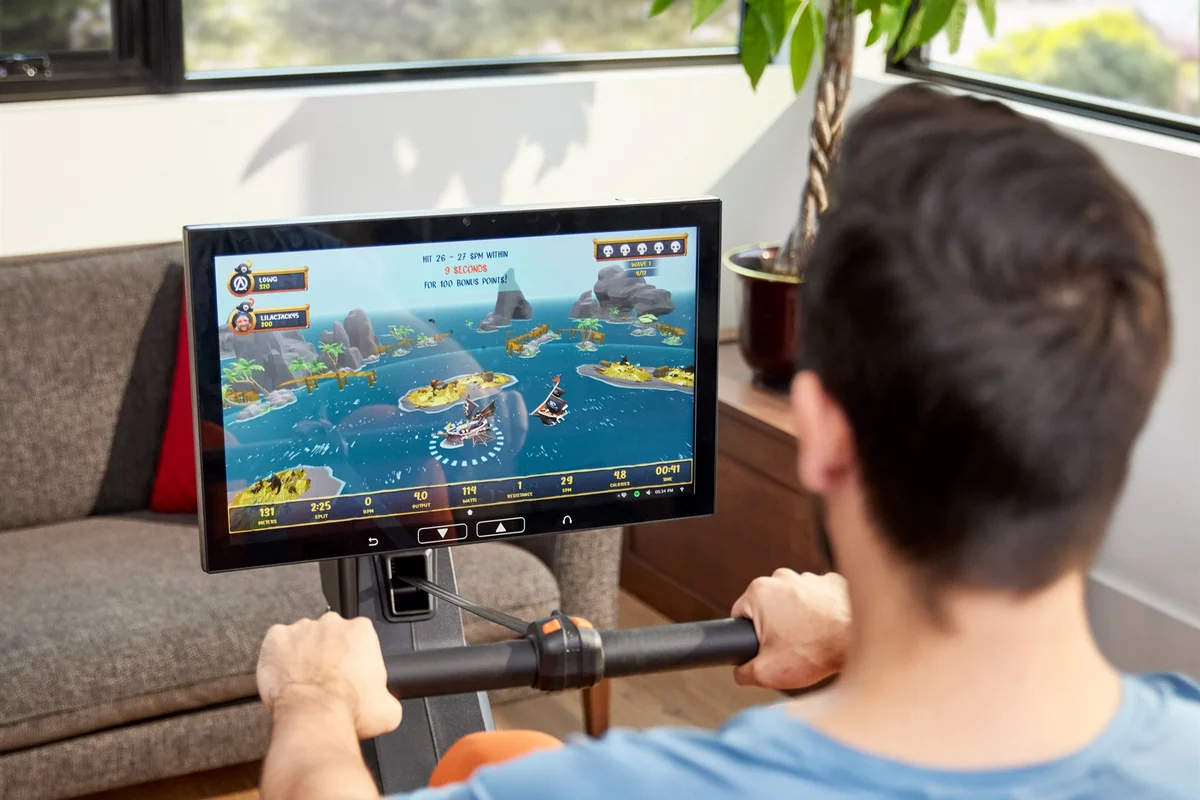
That's the idea behind Aviron. Game psychology (streaks, progress, instant feedback and competition) is built into every workout on the Strong Series, whether you're playing science-backed games like Blaster Brigade and Fishin' Frenzy, racing other members in Tracks, taking a coached class, or rowing a scenic route. The machine still logs the numbers the studies care about, like split, watts and stroke rate. You're just busy with something else while it does.
Madie Moore, a Strong Series owner, hit the three-month mark without noticing:
"I usually feel every second of misery on cardio machines... It's been almost three months and I've rowed at least five days each week without even realizing it."
She's not unusual: 92% of Aviron members are still working out a year later. Browse the full menu in Aviron World.
1,000+ workouts on a 16- or 22-inch touchscreen: science-backed games, live races, coached classes, scenic rows and your streaming apps.
Frequently Asked Questions
Is rowing cardio or strength training?
Both, but mostly cardio. Every stroke pushes against resistance, which builds muscular endurance and some strength, especially in your legs, glutes and back. In a 12-week trial, older adults who rowed twice a week ended up with stronger hips and knees than a group doing conventional resistance exercise. For maximum strength or muscle size, add lifting a couple of days a week.
Does a rowing machine work your abs?
Yes. Your core braces to transfer power from your legs to the handle, and your abs pull you forward from the finish into the next stroke. A 30-minute row is hundreds of strokes, and your core works on every one. More in how rowing tones your abs.
Can a rowing machine help you lose belly fat?
It can help you lose fat overall, and belly fat comes along with it. You can't spot-reduce, but rowing burns a lot of calories, and total fat mass dropped in every group in the 8-week Danish trial. Pair it with sensible eating. More in Is Rowing Good for Belly Fat?
Is 20 minutes of rowing a day enough?
For general health, yes. The WHO recommends 150 to 300 minutes of moderate activity or 75 to 150 minutes of vigorous activity a week. Twenty minutes of moderate rowing on most days gets you close, and four 20-minute sessions of vigorous rowing clears the vigorous target. See how long you should row for more.
What are the disadvantages of a rowing machine?
There's a learning curve, and sloppy form (pulling with your arms first or rounding your back) can strain your lower back, so spend your first sessions on technique. Our form guide covers the common mistakes. Rowers also take floor space, usually 7 to 8 feet, though many store upright. And because you're seated, rowing doesn't load your bones the way walking or running does, so mix in some weight-bearing exercise.
The Strong Series keeps you coming back with science-backed games, live races, coached classes and scenic rows on a 16- or 22-inch touchscreen.
Shop the Strong Series →Or see how it compares in Best Rower of 2026
30-day risk-free home trial · Free shipping · Financing available · HSA/FSA eligible


